
Contents
When disaster strikes, can you really afford to overlook the importance of professional flood cleanup techniques? You must approach the cleanup methodically to ensure safety and effectiveness. Start by evaluating the damage and prioritizing your safety with the right protective gear. From effective water extraction tools to proper sanitization methods, each step is vital in preventing further issues. What’s the best approach for salvaging your belongings while making certain your home is safe? Let’s explore the essential tips and techniques together.
Key Takeaways
- Conduct a thorough damage assessment and document findings for insurance claims, prioritizing safety and potential hazards during cleanup.
- Utilize submersible pumps and wet/dry vacuums for effective water extraction, ensuring safety with proper grounding.
- Implement dehumidification strategies to maintain low humidity levels and prevent mold growth after water removal.
- Choose EPA-approved disinfectants for surface sanitization, focusing on high-touch areas to eliminate bacteria and mold.
- Collaborate with professional restoration services, considering their expertise, equipment, and customer feedback for efficient cleanup.
Assessing the Damage Before Cleanup
Before diving into the cleanup process, it’s essential to thoroughly evaluate the damage to ensure your safety and effectiveness.
Start with an initial inspection of the affected areas. Look for standing water, structural issues, and damaged belongings. It’s crucial to document everything—take photos and make notes for insurance purposes.
As you evaluate, pay attention to potential hazards like exposed wires or weakened floors.
Don’t rush; a careful damage evaluation helps you prioritize your cleanup efforts. Identify what can be salvaged and what needs to be discarded.
This process fosters a sense of community as you may share your findings with neighbors facing similar challenges. Remember, you’re not alone in this. Engaging with others can provide support and resources, making the recovery smoother.
Safety Precautions for Flood Cleanup
As you prepare for flood cleanup, prioritizing safety is essential to avoid injuries and further damage.
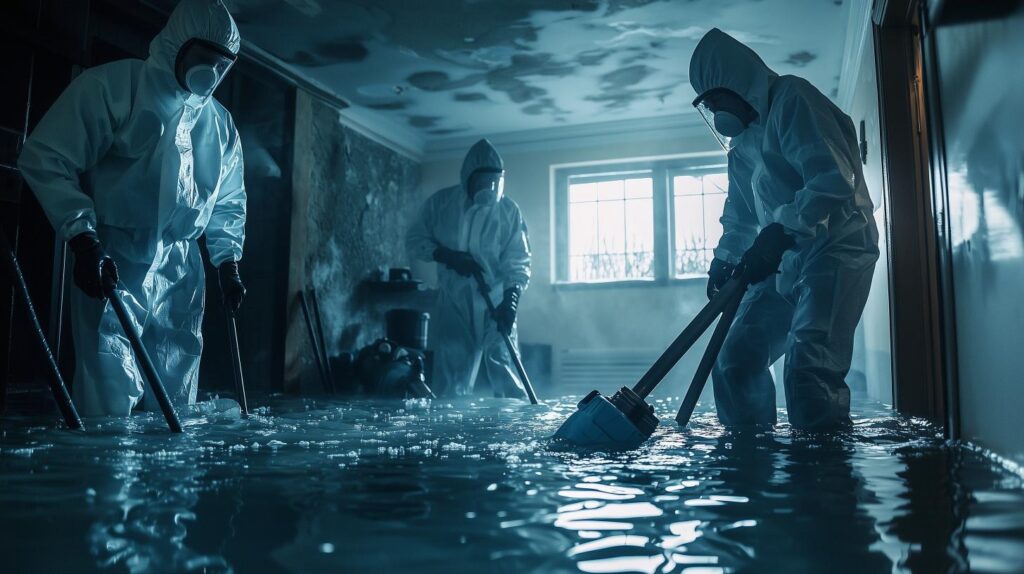
Begin by equipping yourself with personal protective equipment (PPE), such as gloves, boots, goggles, and masks, to shield against contaminants and debris. This gear protects you and fosters a sense of belonging in your recovery efforts, as you join others committed to safety.
Next, ascertain electrical safety by turning off the power supply before entering flooded areas. Water and electricity don’t mix, and this precaution can prevent serious hazards.
Be cautious of slippery surfaces, and consider using a buddy system to keep each other safe while working.
Finally, stay aware of your surroundings and potential hazards. Trust your instincts—if something feels unsafe, take a step back and reassess.
Tools and Equipment for Effective Water Extraction
When tackling flood cleanup, having the right tools and equipment for effective water extraction is vital. You’ll want to make certain that you’re equipped and that your tools are well-maintained for peak performance. Here’s a quick overview of must-have equipment:
| Tool/Equipment | Purpose |
|---|---|
| Submersible Pumps | Remove standing water |
| Wet/Dry Vacuums | Extract water from surfaces |
| Water Extraction Mats | Absorb excess moisture |
| Dehumidifiers | Reduce humidity in the air |
| Personal Protective Gear | Ensure safety during cleanup |
Investing in quality equipment and keeping it in good shape is essential. Regular equipment maintenance will prevent breakdowns and ensure you can efficiently tackle any water extraction task. Remember, working together as a community during these times can make a significant difference.
Using a Wet/Dry Vacuum for Rapid Water Removal
When using a wet/dry vacuum for rapid water removal, it’s essential to start by choosing the right model suited for your needs.
Always prioritize safety by ensuring the vacuum is correctly grounded and free from any electrical hazards.
Once these precautions are in place, you can employ effective techniques to maximize water extraction and minimize damage.
Choosing the Right Vacuum
Choosing the right vacuum can make all the difference in your flood cleanup efforts, especially when time is of the essence.
Opt for a wet/dry vacuum tailored for rapid water removal. Here’s what to take into account:
Vacuum types: Look for models specifically designed for liquids.
Suction power: Higher horsepower means quicker water extraction.
Tank capacity: A larger tank reduces the frequency of emptying.
Filter features: Make sure it has a reusable filter to handle debris.
Portability: Lightweight and wheeled options make maneuvering easier.
Safety Precautions First
Before you plunge into flood cleanup with your wet/dry vacuum, it’s crucial to prioritize safety. Start by wearing personal protective equipment (PPE) like gloves, goggles, and a mask to shield yourself from contaminants. Verify your workspace is free from electrical hazards by unplugging devices and avoiding wet areas.
Here’s a quick checklist for emergency preparedness:
| Safety Gear | Purpose |
|---|---|
| Gloves | Protect against contaminants |
| Goggles | Shield eyes from debris |
| Respirator | Filter harmful particles |
| Waterproof Boots | Keep feet dry and safe |
Taking these precautions safeguards your health and fosters a sense of community responsibility. Remember, safety first ensures effective cleanup later.
Effective Techniques for Use
Using a wet/dry vacuum effectively can greatly speed up the water removal process, so it’s crucial to follow a systematic approach.
Here are some detailed cleanup techniques to keep in mind:
Check for safety hazards: Verify the area is free from electrical risks.
Choose the right attachment: Use the appropriate nozzle for maximum suction.
Work in sections: Tackle one area at a time to maintain focus.
Empty the tank regularly: Don’t let the vacuum fill up; this can slow you down.
Follow up with drying: After removing flood damage, use fans and dehumidifiers to prevent mold growth.
Utilizing Submersible Pumps for Large Areas
When tackling large areas flooded with water, relying on submersible pumps can greatly expedite the cleanup process. These powerful tools efficiently handle floodwater removal, allowing you to focus on restoring your space.
Before starting, verify the pump is in good condition; proper pump maintenance is essential for peak performance.
Begin by placing the pump in the deepest area of the flooded zone, confirming it’s submerged enough to function effectively. Always check the power source, using extension cords rated for wet conditions to maintain safety.
As the water level decreases, reposition the pump to avoid leaving any residual water behind.
Monitor the pump’s operation regularly; listen for unusual sounds that might indicate a malfunction. If you notice any issues, turn it off immediately to prevent further damage.
The Importance of Dehumidification
After a flood, it’s essential to address moisture levels quickly.
Dehumidification prevents mold growth and reduces the risk of structural damage to your home.
Preventing Mold Growth
To effectively prevent mold growth in the aftermath of flooding, maintaining low humidity levels is essential.
Mold thrives in damp conditions, so you must prioritize moisture control. Here are the key steps to help you accomplish mold prevention:
- Use dehumidifiers to reduce humidity levels effectively.
- Ensure proper ventilation in all affected areas.
- Regularly check for leaks and seal any sources of moisture.
- Clean and dry surfaces within 24-48 hours post-flood.
- Monitor indoor humidity, aiming for levels below 60%.
Reducing Structural Damage
While preventing mold growth is essential, addressing structural damage is equally important in flood recovery.
Start by thoroughly dehumidifying affected areas. High humidity can weaken your structure and promote mold, so use dehumidifiers to reduce moisture levels promptly.
Additionally, assess whether your home requires structural reinforcements to ensure its safety. Consider using flood-resistant materials during repairs, as they can withstand future water damage better than traditional options.
This proactive approach protects your property and fosters a sense of belonging, knowing you’ve taken steps to create a safe environment for yourself and your loved ones.
Disinfecting and Sanitizing Affected Areas
Once you’ve removed standing water and debris, it’s crucial to disinfect and sanitize the affected areas to prevent mold growth and eliminate harmful pathogens.
Proper surface sanitization is important for your safety and the well-being of your loved ones. Here are some effective steps to follow:
Choose the right chemical disinfectants: Look for EPA-approved products that are effective against mold and bacteria.
Wear protective gear: Use gloves, masks, and eyewear to safeguard yourself during the cleanup process.
Clean surfaces thoroughly: Scrub affected areas with a brush and disinfectant solution to remove contaminants.
Focus on high-touch areas: Pay special attention to doorknobs, light switches, and countertops, as these can harbor pathogens.
Allow surfaces to dry completely: Verify everything is dry to prevent mold growth before moving on to the next phase.
Salvaging and Restoring Damaged Belongings
When it comes to salvaging your belongings after a flood, prioritize essential items that are vital for your day-to-day life.
Use effective cleaning methods tailored to the materials of your items, ensuring that you’re not causing further damage.
Always wear protective gear and handle items carefully to minimize health risks.
Prioritize Essential Items
As you assess the damage after a flood, it’s crucial to prioritize the essential items that can be salvaged and restored.
Start by identifying your priority items to ensure you focus on what matters most. Here’s a quick list to guide you:
- Essential documents (birth certificates, passports, insurance papers)
- Family photographs (irreplaceable memories)
- Medicines (critical for health)
- Electronics (computers, hard drives with important data)
- Valuable keepsakes (sentimental items)
Carefully evaluate each item’s condition and determine if restoration is possible.
This methodical approach helps you recover what’s most important and provides peace of mind during a challenging time.
Always handle damaged items safely, wearing gloves and masks if necessary.
Effective Cleaning Methods
While salvaging and restoring your belongings after a flood can seem intimidating, employing effective cleaning methods can greatly increase your chances of recovery.
First, carefully remove any flood debris from your items. Use gloves and a mask to protect yourself from harmful contaminants.
Next, assess the water damage; items made of fabric may require thorough washing or professional cleaning, while wood or metal might need sanding and refinishing.
For electronics, consult a professional before attempting to salvage them.
Use a mixture of water and mild detergent to gently clean surfaces, ensuring you rinse and dry thoroughly to prevent mold growth.
Finally, document everything for insurance purposes.
With patience and methodical efforts, you can restore your cherished belongings.
Preventing Mold Growth After Flooding
Mold can develop within 24 to 48 hours after flooding, so it’s crucial to act swiftly to prevent its growth.
Prioritizing mold prevention and moisture control can save you from serious health risks and costly repairs. Here’s how you can effectively tackle this challenge:
Remove standing water: Use pumps or wet vacs to eliminate water quickly.
Dry out your space: Open windows and use fans to promote airflow and reduce humidity.
Dehumidify: Utilize a dehumidifier to maintain indoor humidity levels below 60%.
Inspect and remove damaged materials: Discard saturated carpets, drywall, and insulation, as they can harbor mold.
Apply mold-resistant products: Use paints and treatments designed to prevent mold growth on surfaces.
Working With Professional Restoration Services
After addressing mold prevention, it’s time to contemplate the benefits of working with professional restoration services. Collaborating with experts ensures a thorough cleanup and provides peace of mind. Utilizing effective collaboration strategies can streamline the process, allowing you to focus on recovery.
When selecting a service, consider their expertise, equipment, and customer reviews. Here’s a quick comparison to aid in your decision-making:
| Criteria | Considerations |
|---|---|
| Expertise | Certifications and experience |
| Equipment | State-of-the-art technology |
| Customer Reviews | Testimonials and ratings |
Review
As you navigate the aftermath of flooding, remember that each step you take is a brushstroke in restoring your home’s canvas. With careful attention to safety and methodical cleanup techniques, you can breathe new life into your space. Embrace the opportunity to recover and rejuvenate your surroundings, ensuring that the shadows of water damage fade into memories. By partnering with professionals when needed, you’ll transform chaos into calm, bringing peace back to your cherished haven.
Recent Posts
Why Choose 24/7 Water Extraction for Storm Damage?
When storms hit, you need a swift response to prevent further damage to your property.
7 Tips for Fast Water Extraction After Storms
Many people underestimate the urgency of swift water extraction after a storm, yet it can
How to Handle Storm Damage Water Extraction
When storms hit, the aftermath can leave your property vulnerable to extensive water damage. You