
Contents
Many people underestimate the urgency of swift water extraction after a storm, yet it can greatly reduce damage and mold risk. Knowing the right steps to take can make all the difference in protecting your property. From evaluating the damage to using the right tools, each action counts. Are you prepared to tackle the aftermath and ensure your space is safe and dry? Let’s explore effective strategies for quick water removal.
Key Takeaways
- Quickly assess the property for damage and document it for insurance claims before beginning the extraction process.
- Shut off utilities, including power and water supply, to prevent further hazards during the extraction.
- Use submersible pumps for large water volumes and wet vacuums for smaller areas to speed up removal.
- Employ dehumidifiers and fans to enhance drying efficiency after water removal, ensuring thorough moisture elimination.
- Contact professional services for expert assistance, specialized equipment, and mold remediation if needed.
Assess the Damage Quickly
As soon as the storm passes, you need to assess the damage quickly to prioritize your response.
Start with a quick evaluation of your property. Look for visible signs of water intrusion, such as puddles, wet walls, and damaged flooring. Don’t forget to check basements and crawl spaces where water often accumulates.
Document everything, taking photos for insurance claims later. If you notice structural damage or hazards, make a note to address them promptly.
Focus on areas that could lead to further issues, like mold growth, which can develop within 24 to 48 hours in damp conditions.
Gather your family to discuss your findings and plan your next steps together.
Remember, addressing damage as a team fosters a sense of belonging and support during tough times.
Shut Off Utilities to Prevent Hazards
To prevent hazards during water extraction, shut off your utilities immediately after evaluating the damage. This step is essential for utility safety and helps avoid potential dangers like electrical shock or gas leaks.
If floodwaters are present, even a small current can pose serious risks, so take action quickly.
Start with the main power supply; turn off the circuit breakers or unplug appliances if you can do so safely.
Next, address your water supply—shutting off the main valve prevents further flooding and water damage.
Don’t forget about gas lines; if you smell gas or see damage, evacuate the area and call professionals.
Use Pumps and Wet Vacuums for Efficient Removal
After a storm, using pumps and wet vacuums can greatly speed up water removal from your space.
Submersible pumps work well for large volumes of water, while wet vacuums are perfect for smaller, leftover puddles.
Both tools help prevent further damage and make your cleanup efforts more efficient.
Types of Pumps
When flooding strikes, choosing the right equipment can make all the difference in speeding up water removal. Two popular types of pumps are submersible pumps and centrifugal pumps. Each serves a unique purpose and can help you tackle water extraction effectively.
| Pump Type | Best Use |
|---|---|
| Submersible Pump | Ideal for deep water removal |
| Centrifugal Pump | Efficient for shallow areas |
Submersible pumps are designed to be submerged in water, making them perfect for removing large volumes quickly. On the other hand, centrifugal pumps work best in shallow water situations, using rotational energy to move water efficiently. Choose the right pump for your needs, and you’ll see faster results.
Wet Vacuum Benefits
A wet vacuum can be a game-changer for efficient water removal after storms. Its wet vacuum advantages include powerful suction that quickly pulls water from carpets, floors, and other surfaces, helping you restore your home faster.
When making your wet vacuum selection, consider factors like tank capacity, suction power, and additional features like filters and attachments. A model with a larger tank can save you time, while high suction power ensures thorough cleaning.
Plus, wet vacuums are user-friendly, making them accessible for everyone in your community. By investing in a quality wet vacuum, you’ll protect your home from water damage and join others in your neighborhood committed to effective storm recovery.
Dry Out the Area With Dehumidifiers and Fans
To effectively dry out your space, you need to choose the right dehumidifiers and fans for the job.
Make sure to optimize airflow direction to enhance drying efficiency, and keep an eye on humidity levels to track your progress.
These steps will help you create a drier environment quickly and efficiently.
Select the Right Equipment
Selecting the right equipment can make a significant difference in how quickly you dry out an area affected by stormwater.
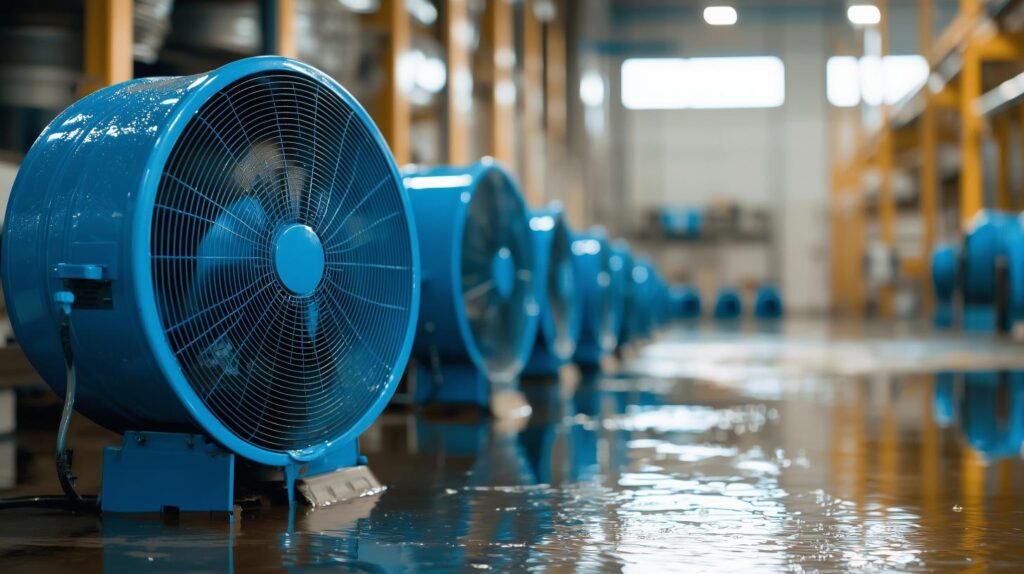
You’ll want to invest in effective equipment types, such as powerful dehumidifiers and high-velocity fans. Dehumidifiers help remove moisture from the air, while fans circulate it, speeding up evaporation.
Before using any equipment, check for proper maintenance to ensure peak performance.
Clean filters and inspect hoses for blockages. This extends the life of your equipment and enhances its efficiency.
Optimize Airflow Direction
Once you’ve got the right equipment, optimizing airflow direction can greatly enhance the drying process.
By focusing on airflow patterns and employing effective ventilation techniques, you’ll create a more efficient drying environment.
Here are some key steps to follow:
Position dehumidifiers near damp areas to draw moisture out.
Set up fans to blow air towards the wet spots, ensuring maximum coverage.
Open windows and doors to allow fresh air to circulate, helping to expel moist air.
Create a cross-ventilation setup by placing fans across from each other.
Monitor Humidity Levels
While you’re working to dry out your space, monitoring humidity levels is essential to ensure effective moisture removal.
Invest in a hygrometer to keep tabs on humidity control. Aim for levels below 60% for ideal drying.
Dehumidifiers are your best friends in this process; they pull excess moisture from the air, aiding in quicker drying.
Position fans strategically to improve airflow, but make sure they’re not blowing damp air back into the room.
Regularly check the humidity readings, adjusting your dehumidifiers and fans as needed.
By staying proactive with moisture monitoring, you’ll create a healthier environment and prevent mold growth.
Together, these steps can make a significant difference in your post-storm recovery efforts.
Remove Affected Materials Immediately
As soon as the storm passes, you need to act quickly to remove affected materials from your property.
Delaying could lead to further damage and potential health risks.
Start by evaluating what can be salvaged and what needs material disposal. Here’s a quick list to guide you:
Furniture: Remove wet furniture, especially upholstery, as it absorbs moisture quickly.
Carpets and Rugs: Take out any soaked carpets or rugs; they often harbor mold.
Drywall: Cut out and dispose of any water-damaged drywall to prevent structural issues.
Clothing and Textiles: Wash or throw away affected belongings that can’t be cleaned thoroughly.
Sanitize Surfaces to Prevent Mold Growth
After removing affected materials, the next significant step is to sanitize surfaces to prevent mold growth. Mold thrives in damp environments, so using effective mold prevention techniques is essential.
Start by cleaning all surfaces with a mixture of water and a mild detergent. Pay special attention to hard-to-reach areas where moisture can linger.
For deeper sanitization, consider using a solution of one cup of bleach per gallon of water. This mixture is a powerful disinfectant that helps eliminate mold spores. Be sure to wear gloves and a mask to protect yourself during this process.
Once you’ve sanitized, dry all surfaces thoroughly. You can use fans or dehumidifiers to speed up the drying process.
Contact Professionals for Comprehensive Cleanup
When your home faces significant water damage, contacting professionals for thorough cleanup can save you time and prevent further issues.
Relying on expert services ensures effective restoration and provides you with peace of mind.
Here are some key reasons to reflect on professional cleanup options:
Expertise: Professionals have the training and experience to handle complex water damage situations.
Advanced Equipment: They use industrial-grade tools to extract water efficiently and dry out your home.
Mold Prevention: Timely cleanup reduces the risk of mold growth, protecting your family’s health.
Insurance Assistance: Many professional services help navigate insurance claims, easing your financial burden.
Recap
In the aftermath of a storm, acting quickly can save you from extensive damage and mold issues. By evaluating the damage, shutting off utilities, and using the right equipment, you can effectively tackle the water removal process. Don’t forget to dry out the area and sanitize surfaces to keep mold at bay. When in doubt, why not reach out to professionals for help? They can ensure your home is restored properly and safely. Your peace of mind is worth it!
Recent Posts
Why Vacant Snowbird Homes in Naples and Marco Island Grow Mold So Fast
If you own a seasonal home in Naples, Marco Island, or anywhere along the Southwest
Why Your Air Conditioner Might Be Growing Mold in Southwest Florida
Florida’s humidity doesn’t stop at the walls of your house. It gets pulled straight into
Why Bleach Doesn’t Kill Mold: What Actually Works for Naples FL Homes
Walk down any cleaning aisle in Naples and you’ll see rows of bleach bottles promising